SYNTHWAVE
The history of synthwave is rooted in a nostalgic revival of 1980s electronic music, neon-era pop imagery, film soundtracks and arcade culture. It emerged as a recognizable genre in the mid-to-late 2000s before expanding widely in the 2010s. A concise history is best understood as a chain of influences: 1980s synth-driven music and visuals, then 2000s artists reinterpreting those sounds with modern production, then internet culture and film/TV exposure turning the style into a global scene.
Origins and influences
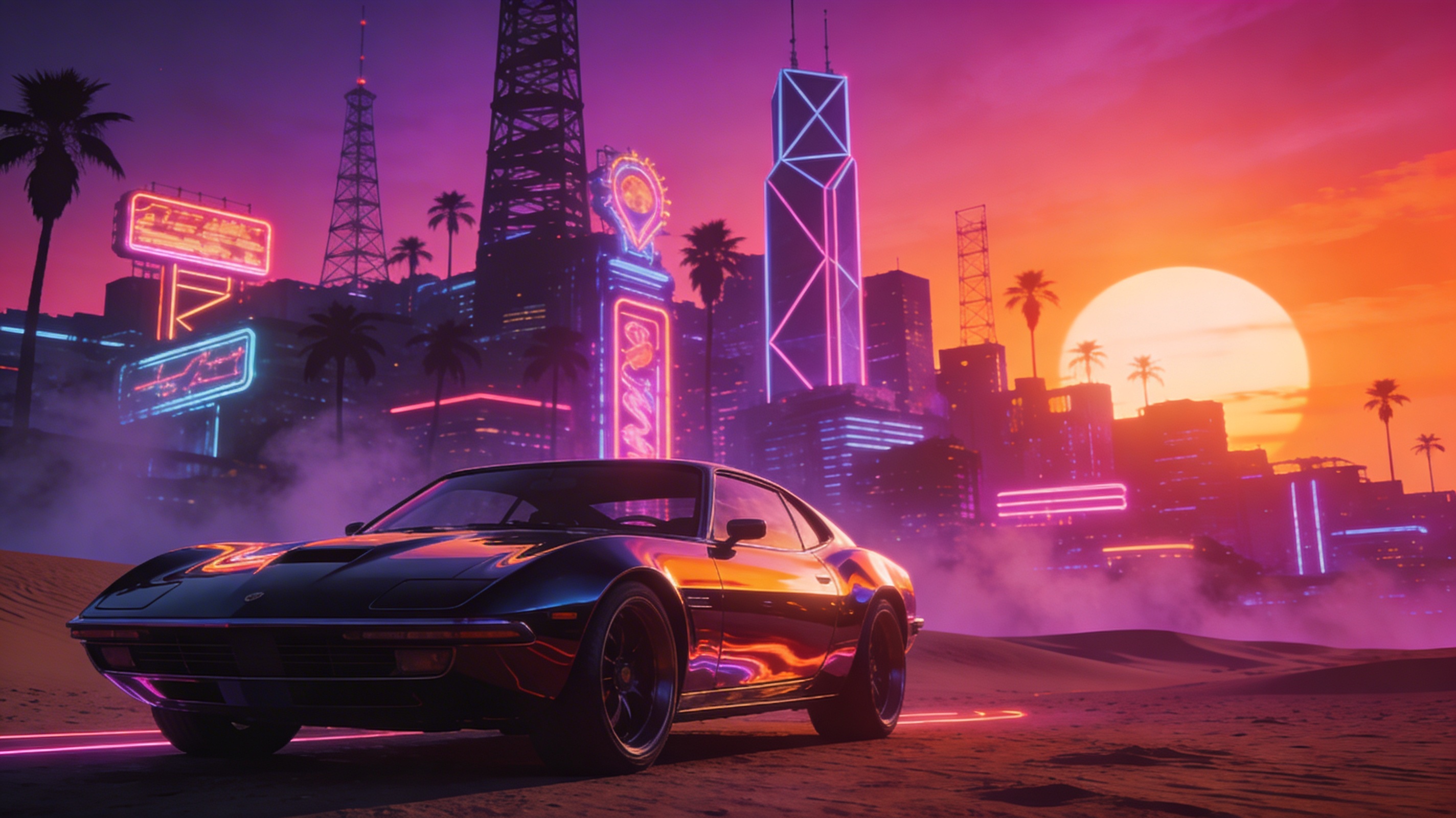
Synthwave did not appear from nowhere; it borrows heavily from 1980s synthpop, new wave, French house, disco, and the scores of action, science-fiction, and horror films. It also draws from video games, VHS-era graphics, television idents, and advertising aesthetics from that decade, which is why its sound is so tightly linked to a visual language of sunsets, grids, chrome, and retro futurism. The genre is often described as both nostalgic and futuristic at the same time, because it recreates an imagined version of the 1980s rather than simply copying it.
Early development
Most histories place synthwave’s earliest formation in the mid-2000s, with French artists playing a central role. David Grellier, known as College, is frequently cited as a pioneer, and his 2008 EP Teenage Color is often treated as a key early release for the style.
Earlier groundwork also came from related French electronic acts that revived 1980s textures, helping establish the emotional and sonic palette that synthwave would later formalize.
Breakthrough moment
The genre’s public visibility grew sharply when music associated with it reached mainstream audiences through film and games. One major turning point was the 2011 film Drive, whose soundtrack included “A Real Hero” by College and Electric Youth, giving synthwave a wider audience and strong cultural identity.
Another important catalyst was the retro gaming and pop-culture revival of the early 2000s, which made 1980s references feel fresh again rather than ironic.
Growth in the 2010s
During the 2010s, synthwave developed into a broader online scene with multiple substyles, including outrun, retrowave, dreamwave, and darker, more aggressive variants. Artists such as Kavinsky, Lazerhawk, Miami Nights 1984, The Midnight, Mitch Murder, and Carpenter Brut helped define different corners of the genre, from cinematic and melodic to heavy and dystopian.
The soundtrack for Far Cry 3: Blood Dragon in 2013 also helped spread the style by connecting it to a high-profile game release.
Sound and style
Musically, synthwave usually centers on analog-style synthesizers, drum machines, bass arpeggios, gated snares, and lush pads, often with sparse vocals or no vocals at all. The production often aims for a polished version of 1980s electronic music, not a literal reconstruction, so it feels contemporary while still evoking cassette tapes, VHS glow, and arcade cabinets. That balance between homage and modernization is one of the main reasons the genre endured beyond a short nostalgia trend.
Cultural meaning
Synthwave became more than a genre because it also became an aesthetic movement tied to retro-futurism, online communities, independent artists, and digital self-publishing. It resonated with listeners who had grown up with 1980s media, but also with younger audiences who discovered that era through films, games, and internet culture. In that sense, synthwave is as much about memory and imagined futures as it is about music.
Lasting legacy
Today, synthwave remains influential even when artists do not label themselves with the term, because its sonic DNA has spread into film scores, game music, metal-electronic hybrids, and broader electronic production. Its history shows how a niche internet revival can become a durable cultural style when sound, visuals, and nostalgia reinforce each other. The genre’s story is therefore not just a comeback of the 1980s, but a reinvention of that decade for a new digital age